Assisted Living Tour Checklist for Pell City Communities
A room-by-room checklist to help Pell City families compare care, safety, daily life, contracts, and costs with clear notes.
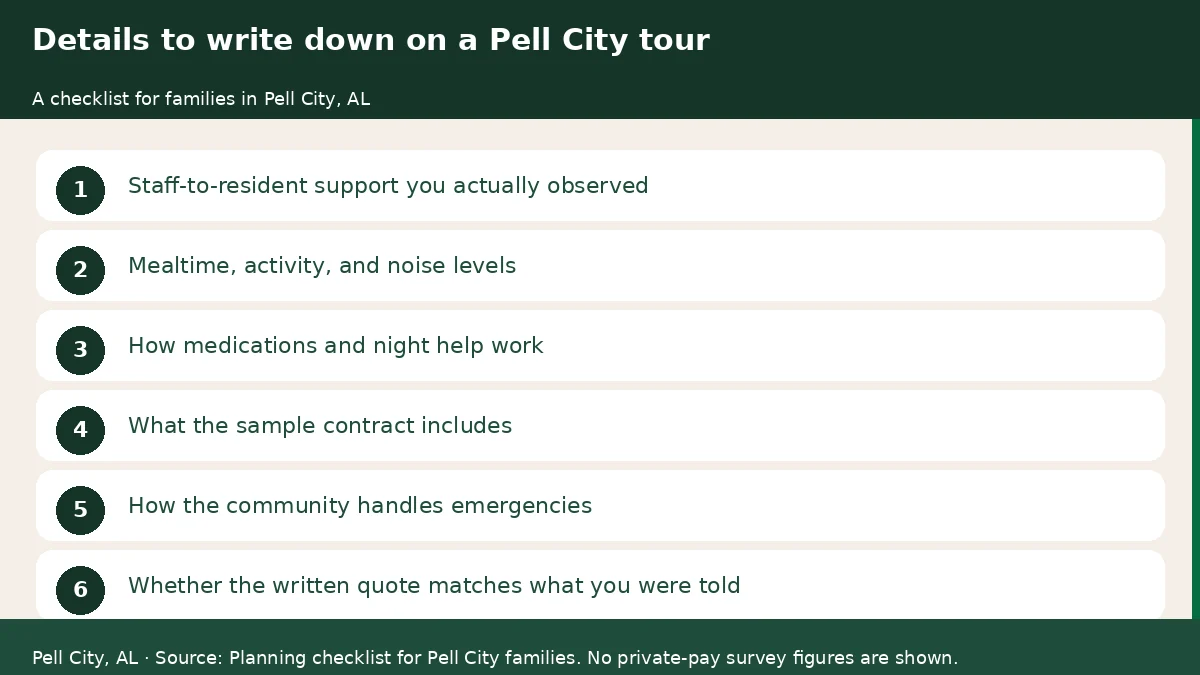
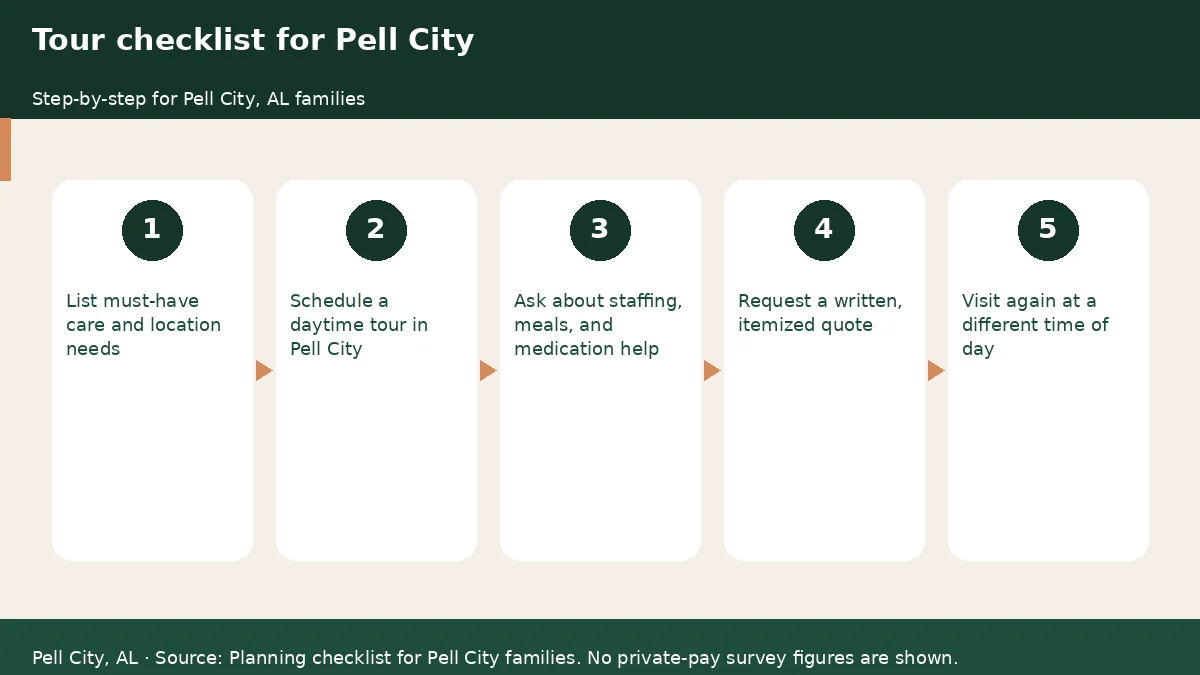
A tour is most useful when it produces notes you can compare, rather than a general impression that a building seemed pleasant. This assisted living tour checklist for Pell City, AL, is organized to help adult children and spouses observe daily life, ask consistent questions, and separate what is included from what still needs a written answer. Print it or copy the headings into a notebook. At every community, record what you saw, what a staff member explained, and what requires follow-up.
Village East is at 220 Kings Circle in Pell City, in St. Clair County, and offers assisted living and memory care. The checklist below does not assume which service or support plan would fit your family.
Before You Visit: Start With Daily Needs
Start with your relative's routines rather than the building. Describe an ordinary day now, including meals, mobility, bathing, dressing, medication routines, sleep, and the moments when another person must step in. Note what your relative wants to preserve, such as privacy, a quiet corner, a favorite chair, or regular family visits.
- List the help currently provided by family, paid caregivers, or others, and identify which tasks are becoming difficult to sustain.
- Write down recent changes in memory, balance, appetite, continence, or communication that the community should discuss with you.
- Prepare questions about physicians, pharmacies, therapy providers, transportation, and health appointments.
- Ask whether you can observe a meal or activity and see the type of room being considered, rather than only a model.
- Decide who will attend, who will take notes, and how your relative's preferences will shape the decision.
For a local overview, read about assisted living in Pell City before comparing communities. Plan the drive in practical terms: Interstate 20 traffic, Alabama heat, or heavy rain can affect arrival and the parts of the property you see. Relatives traveling from Birmingham, Moody, Leeds, Cook Springs, or near Logan Martin Lake may need different arrival times. Leave enough time for questions without rushing your relative.
Assisted Living Tour Checklist for Pell City, AL: First Impressions
During the first few minutes, watch interactions as carefully as finishes. A clean lobby matters, but so do the hallways, bathrooms, and spaces residents actually use. Avoid treating one quiet moment or one busy moment as proof of the overall routine.
- Are walkways well lit, uncluttered, and manageable for someone using a cane, walker, or wheelchair?
- Do staff members greet residents by name, listen without hurrying them, and offer help discreetly?
- Do residents appear comfortably dressed and appropriately supported, with privacy respected during personal care?
- Are dining rooms, lounges, and outdoor areas arranged so residents can actually use them?
- Do you notice persistent odors, excessive noise, uncomfortable temperatures, or maintenance concerns that need an explanation?
Staff and Care: Understand an Ordinary Day
Alabama's licensing framework is worth understanding before you compare terminology. The Alabama Department of Public Health's facility descriptions explain that assisted living facilities are licensed separately from Specialty Care Assisted Living Facilities, which are specially licensed and staffed for residents with cognitive impairment. Ask which license applies to the setting you are considering; a marketing label alone does not answer that question.
- Who completes the initial assessment, writes the support plan, and revisits it after a health or mobility change?
- Which staff are present during evenings, nights, and weekends, and how does a resident request help?
- How are medicines ordered, stored, prompted, or administered, and how are errors or changes communicated?
- What training do staff receive in dementia support, safe assistance, infection prevention, and emergency response?
- How are families informed about a fall, a hospital visit, a behavioral change, or a concern about eating?
Village East offers both assisted living and memory care. If memory support is part of your search, review memory care and ask how supervision, daily routines, environmental cues, and family communication work in practice. Evaluate memory care as support and environment, not as a promise to change dementia.
Safety and Rooms: Look Beyond the Furnishings
Ask to see the kind of room your relative would actually occupy. A attractive staged space can still leave unanswered questions about bathroom access, storage, privacy, or how help reaches the room.
- How does a resident call for assistance from the bedroom and bathroom, and how is that system checked?
- Are thresholds, flooring, handrails, grab bars, lighting, and bathroom layouts suitable for changing mobility?
- Can the room accommodate familiar furniture and meaningful personal items without blocking safe movement?
- How are exterior doors, windows, and resident supervision handled while preserving appropriate independence?
- What are the procedures for severe weather, power interruptions, fire, evacuation, and family updates?
- Who handles maintenance, housekeeping, laundry, and a report that something in the room needs repair?
Also ask what happens if needs exceed the support available in that room or setting. The answer should connect to assessment, communication, and contract terms rather than a vague reassurance.
Dining: Evaluate a Meal, Not Just a Menu
If a meal observation is available, notice pacing, assistance, noise, and whether residents have real choices. Food should be considered alongside dignity and routine, not only presentation.
- How are preferences, allergies, physician-directed diets, and texture needs communicated to dining and care staff?
- What happens when a resident misses a meal, wants a different option, or needs encouragement and physical assistance?
- Are drinks and snacks accessible between meals, and who notices a meaningful change in intake?
- Can residents choose where and with whom to sit, including a quieter arrangement when needed?
- May family members join a meal, and what scheduling or charges apply?
Activities and Family Connection: Notice the Daily Rhythm
A calendar is a starting point, not evidence of participation. Ask which activities residents regularly choose and how the community includes people who are shy, tired, hearing impaired, or living with cognitive change.
- Which offerings reflect current residents' interests, and how often does the planned calendar change?
- Are there opportunities for music, faith practices, gentle movement, gardening, games, and quiet individual pursuits?
- How are activities adapted for people who need cues, shorter sessions, or a smaller setting?
- What transportation or accompaniment is available for appointments, errands, or local outings?
- How do visits, phone calls, celebrations, and routine family updates work, especially when relatives live at a distance?
The useful question is whether your relative could find a recognizable rhythm here, including permission to decline an activity and spend time alone.
Costs and Contracts: Compare the Full Picture
For Pell City, the uses the Birmingham metro region, which includes St. Clair County. These figures are survey medians or survey-based amounts, not community quotes, and they are not Village East prices.
These services are not interchangeable. Home care at the stated schedule is not continuous supervision, and nursing home care serves different needs. Use the figures to frame a budget, then request a written estimate for the person and room actually being considered. Contact Village East directly for current rates and fee information.
- Which services are included in the base charge, and which depend on an assessment or added care level?
- Are there separate charges for medication support, laundry, transportation, supplies, guest meals, or a second occupant?
- What do the contract say about deposits, refunds, rate adjustments, hospital or family absences, notice periods, and termination?
- Under what circumstances could the community require a different setting or help arrange a transition?
Medicare's long-term care coverage guidance states that Medicare does not cover long-term custodial care when that is the only care needed. The Alabama Medicaid Elderly and Disabled Waiver covers specified home and community-based services for eligible people, but not assisted living room, board, or assisted living services. Most Alabama families pay privately for assisted living.
After the Visit: Turn Notes Into Clear Next Steps
Review your notes while the visit is still fresh. Separate direct observations from verbal assurances, and mark every item that needs a document or a more specific answer.
- Record the strongest fit, the largest concern, and the unanswered question for each community.
- Request written responses about services, charges, assessments, absences, and changes in care.
- Discuss the visit with your relative in concrete terms, including what felt comfortable or confusing.
- Ask whether another visit is possible at a different time, such as during a meal or evening routine.
- Keep copies of the materials you receive so later comparisons use the same assumptions.
If no option fits yet, a decision does not have to be forced. The National Institute on Aging's respite care overview explains that respite can provide a short-term caregiver break through in-home help, adult day centers, or residential stays; availability must be confirmed directly. The Eldercare Locator can also connect families with local aging services. A completed assisted living tour checklist for Pell City, AL, should leave your family with clearer observations, fewer assumptions, and a manageable set of follow-up questions.
Frequently asked questions
What should I bring to an assisted living tour in Pell City?
Bring a concise list of current routines, the help your relative needs, recent changes in memory or mobility, and questions about medicines and appointments. Include your relative's priorities, such as privacy, quiet, or frequent family visits. A notebook or phone works well for recording the same observations at each Pell City community. Ask permission before taking photographs, especially where residents or their personal information might be visible.
How can I compare assisted living costs in Pell City?
These are market figures, not Village East rates. Ask each community for current rates and a written estimate showing the base charge, assessed care, optional services, one-time fees, and possible add-ons.
Does Alabama Medicaid pay for assisted living in Pell City?
Alabama Medicaid's Elderly and Disabled Waiver can cover certain home and community-based services for eligible people who meet nursing facility level-of-care criteria. It does not pay for assisted living room, board, or assisted living services, and most Alabama families pay privately for assisted living. Medicare also does not cover long-term custodial care when that is the only care needed. Ask a benefits adviser to review your relative's specific eligibility and other possible coverage.
What should I ask about memory care during a Pell City tour?
Ask which Alabama license applies to the setting, how supervision works throughout the day and night, and how staff respond when a resident becomes confused or tries to leave. Review the approach to personal routines, meaningful activities, dining support, family updates, and changes in needs. Alabama separately licenses Specialty Care Assisted Living Facilities for cognitive impairment. Memory care should be understood as support, supervision, and environment, not a promise of improvement.
How should Pell City families plan around traffic and weather?
Plan around the drive rather than setting a rushed appointment. Interstate 20 traffic and Alabama heat or heavy rain can affect relatives coming from Birmingham, Moody, Leeds, or Cook Springs. Ask whether another visit is possible at a different time, such as during a meal. Also request the community's general severe-weather and power-interruption procedures, including how families receive updates. Distance matters less when visiting roles and communication expectations are clear.
Talk with Village East
If you are weighing care options in Pell City, call (205) 814-4200 or request a tour. Our team can talk through current availability, rates and next steps. Please confirm all details directly, since published figures and listings change over time.
Sources
- Medicare: long-term care coverage
- Eldercare Locator (U.S. Administration for Community Living)
- National Institute on Aging: What is respite care?
- Alabama Department of Public Health: Facility descriptions
- Alabama Medicaid: Elderly and Disabled Waiver
Program rules and benefit amounts were checked on the linked official pages in November 2026 and can change.